
The 28th Military Police Company (Retired) organization is open to membership for any personnel who have been a member of the 28th MP Company for at least six years and is now retired from military service.

28th Division History
28th INFANTRY DIVISION, Pennsylvania Army National Guard.
NICKNAME: Keystone Division (The Germans called it the "Bloody Bucket" Division during WWII
SONG: "28th Roll On." Words and music by Sgt Emil Roab, November 1944
SHOULDER PATCH: A red keystone, symbolic of the State of Pennsylvania, known as the Keystone State. Division was composed in 1917 of men from Pennsylvania National Guard units.
HISTORY: 28thID was organized in Sep 1917, at Camp Hancock, GA, from Pennsylvania National Guard troops. It went overseas in May and June 1918. It participated in the Champagne-Marne defensive and the Aisne-Marne offensive. Division's outstanding action was in the Mouse-Argonne offensive. One of its great achievements was rescue of the famous "Lost Battalion" of the 77th Infantry Division in the Argonne. During operations the Division took 921 prisoners and its casualties totaled 13,980. Division returned to the United States in spring of 1919. The 109th Infantry Regiment, originally from Scranton, PA distinguished itself in the Marne battle. The 110th Infantry Regiment bore the full brunt of Ludendorff's "Peace Storm," a bid to break through and capture Paris. The 112th Infantry Regiment charged over the top at Hill 204 near Chateau Thierry. Battery "B" of the 107th Field Artillery Battalion has a history going back to the Civil War. The 108th Field Artillery Battalion dates back to 1840 and was the first unit to use the name "National Guard," an adaptation of Napoleon's Garde Nationale. The 109th Field Artillery Battalion had three separate companies supporting George Washington's Continental Army.
COMPONENT UNITS: 109th, 110th and 112th Infantry Regiments; 28th Cav Rcn Tp (Mecz); 103rd Engr (C) Bn';103 Med Bn; Div Arty: 107th, 109th and 229th (105 How) and 108th (155 how) FA Bns; Sp Tps; 28th QM Co; 28th Sig Co; 728th Ord Co(LM); HQ Co; MP Platoon and Band.
Click here to reflect on all of the Fallen Heroes from the 28th ID during the Iraq War
28th INFANTRY DIVISION, Pennsylvania Army National Guard.
NICKNAME: Keystone Division (The Germans called it the "Bloody Bucket" Division during WWII
SONG: "28th Roll On." Words and music by Sgt Emil Roab, November 1944
SHOULDER PATCH: A red keystone, symbolic of the State of Pennsylvania, known as the Keystone State. Division was composed in 1917 of men from Pennsylvania National Guard units.
HISTORY: 28thID was organized in Sep 1917, at Camp Hancock, GA, from Pennsylvania National Guard troops. It went overseas in May and June 1918. It participated in the Champagne-Marne defensive and the Aisne-Marne offensive. Division's outstanding action was in the Mouse-Argonne offensive. One of its great achievements was rescue of the famous "Lost Battalion" of the 77th Infantry Division in the Argonne. During operations the Division took 921 prisoners and its casualties totaled 13,980. Division returned to the United States in spring of 1919. The 109th Infantry Regiment, originally from Scranton, PA distinguished itself in the Marne battle. The 110th Infantry Regiment bore the full brunt of Ludendorff's "Peace Storm," a bid to break through and capture Paris. The 112th Infantry Regiment charged over the top at Hill 204 near Chateau Thierry. Battery "B" of the 107th Field Artillery Battalion has a history going back to the Civil War. The 108th Field Artillery Battalion dates back to 1840 and was the first unit to use the name "National Guard," an adaptation of Napoleon's Garde Nationale. The 109th Field Artillery Battalion had three separate companies supporting George Washington's Continental Army.
COMPONENT UNITS: 109th, 110th and 112th Infantry Regiments; 28th Cav Rcn Tp (Mecz); 103rd Engr (C) Bn';103 Med Bn; Div Arty: 107th, 109th and 229th (105 How) and 108th (155 how) FA Bns; Sp Tps; 28th QM Co; 28th Sig Co; 728th Ord Co(LM); HQ Co; MP Platoon and Band.
Click here to reflect on all of the Fallen Heroes from the 28th ID during the Iraq War
|
28th Military Police Company History
The unit was reorganized and redesigned as the 28th MP Co. 24 March 1964. State activations of the unit were initiated during the Pittsburgh riots following the assassination of Martin Luther King, Jr (1968), Hurricane Agnes in the Wilkes-Barre Area (1972), the Truckers Strike (1974), the Johnstown Flood (1977), the Glencoe/Hyndman Flood (1984), and Snow Emergency (1991). Personnel were deployed to Panama in July 1996 and February 1999 as part of a two-week training mission. The troops worked at two Army installations: Fort Clayton, at the southern entrance to the Panama Canal, and nearby Fort Kobbe, adjacent to Howard Air Force Base. There, they augmented the U.S. Army's active-duty military police force by working three shifts around the clock, and taking on a variety of law enforcement responsibilities, including guarding gates, screening visitors, patrolling housing compounds and monitoring traffic. In 2000, members of the 28th Military Police Company deployed for three annual training rotations to Italy. There, the MPs took up force protection duties on two high-profile Army posts, side-by-side with their active-duty comrades. Most of the MPs were stationed at Camp Ederle near the heart of the northern Italian city of Vicenza. A small detachment from the 28th MP Company redeployed 200 miles south of Vicenza to Camp Darby, near Pisa. There, they augmented security details at a large supply and equipment depot maintained by the Army to support any contingencies in the region. In 2001, personnel were deployed to Bosnia to assist in peace-keeping duties. 2001 - present: The unit has been involved in numerous deployments to the war in Iraq and Afghanistan. In 2017, after 53 years as a separate company within the Division, the 28th MP's were integrated as a subordinate unit into the 165th MP Battalion. Transformation and reorganization of military police units within the 28th Division The division was officially established in 1879 and was later redesignated as the 28th Division in 1917, after the entry of America into the First World War. It is a part of the Pennsylvania Army National Guard, Maryland Army National Guard, Ohio Army National Guard, and New Jersey Army National Guard. It was originally nicknamed the "Keystone Division," as it was formed from units of the Pennsylvania Army National Guard; Pennsylvania being known as the "Keystone State". During World War II, it acquired the nickname the "Bloody Bucket" division by German forces due to its red insignia. But today the 28th Infantry Division goes by the name given to it by General Pershing during World War I: "Iron Division". The 103rd MP Platoon was formed in July 1917 in Harrisburg, PA. The 28th is one of the most decorated infantry divisions in the United States Army. WWI http://www.honorstates.org/index.php?id=157420 The Meuse-Argonne Offensive, also known as the Maas-Argonne Offensive and the Battle of the Argonne Forest, was a major part of the final Allied offensive of World War I that stretched along the entire Western Front. It was fought from September 26, 1918, until the Armistice of 11 November 1918, a total of 47 days. The MP platoon suffered 3 casualties during this offensive. **CPL Thomas C. Kinsley, 01 October 1918 **Bugler Frank B. Crissman, 3 October 1918 **PVT Paul T. Schultz, 21 October 1918 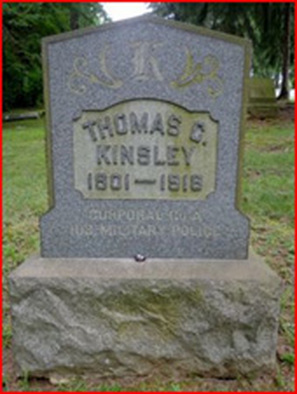
Corporal Thomas C. Kinsley, DOB 1901 – DOD 01 October 1918 Burial: Sewickley Cemetery, Sewickley
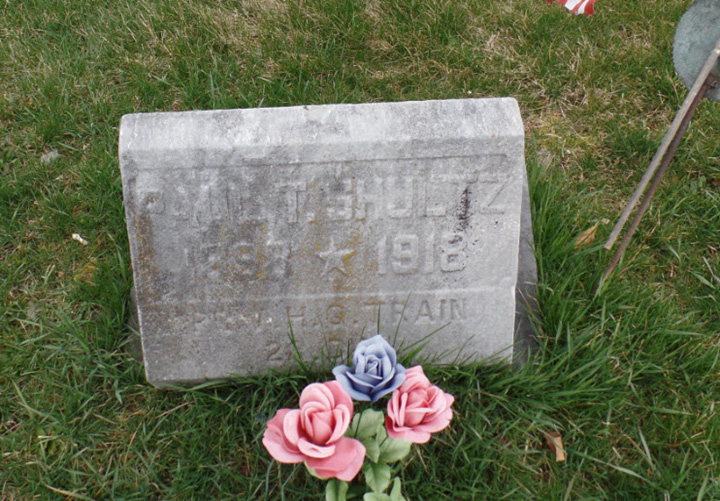
Private Paul T. Schultz
DOB: 1898 DOD: 21 October 1918
|
The 1805 Harpers Ferry Flintlock Pistol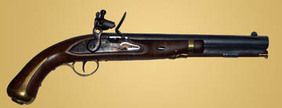
The 1805 Harpers Ferry Flintlock Pistol was used in the design of the Military Police 'Crossed Pistol' symbol. In 1920, the Army reorganized. There were 5000 infantrymen assigned to the Military Police mission. This caused the War Department to create another temporary arm of the service: the Corps of Military Police. The device and its development were the idea of Captain George M. Chandler, War Department General Staff, U.S. Army. The original 1805 Harpers Ferry pistols for the design were in the collection of Major Jerome Clark, U.S. Army. Drawings for the insignia were made in 1922 by the Heraldic Section, Quartermaster General. The Chief of Staff, General Pershing, signed the drawings and later approved the metal collar mark, still proudly worn by the U.S. Army Military Police Corps. The "Crossed Pistols" insignia for the Military Police Corps was approved in 1923. The device depicts two scale models of the Harper's Ferry officer's sidearm and holster pistol of a century-and-a-half ago, rather than dueling pistols, as some believe. The Crossed Pistols have been the Official symbol of the Military Police Corps since its inception and continue to represent military and martial preparedness. SO NO MP WILL BE FORGOTTEN
CLICK HERE FOR A LISTING OF ALL MILITARY POLICE CORPS COMBAT LOSSES FROM THE MILITARY POLICE ARCHIVES OF THE MILITARY POLICE MUSEUM, FORT LEONARD WOOD, MISSOURI 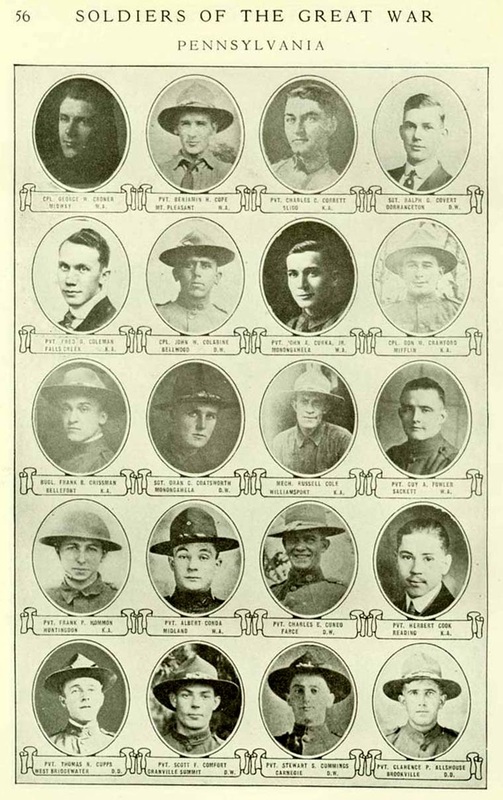
|
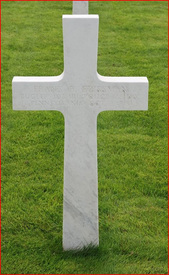
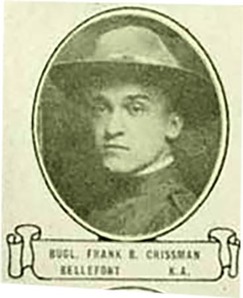
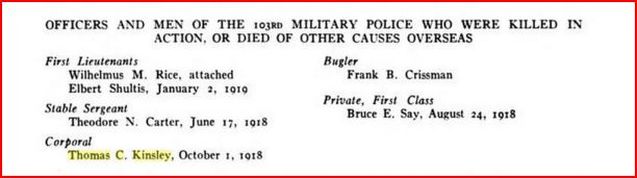
1LT Rice had been detached from the 111th INF when he was killed.
In 1941 the 103rd MP Platoon was redesignated as the 28th MP Platoon. They were re-organized into the 28th Military Police Platoon at Camp Beauregard, Louisiana on 15 February 1942 by General Orders # 9, Par 3, HQ 28th Infantry Division.
WWII
Excerpt from http://www.lonesentry.com/gi_stories_booklets/militarypolice/
SGT Charles A. Brence, a 28th Division MP, ran into something tougher, proving that a town patrolman does more than make visiting soldiers unhappy. In a surprise move, enemy infantry and tanks poured across the Our River and overran defenses outside Cherisaux, Luxembourg, Dec. 16, 1944. SGT Brence sent his squad to a nearby infantry CP, then reported to an aid station of the 103rd Medical Battalion. Taking weapons and ammunition from casualties, he passed them out to his men.
The advance of the enemy endangered the aid station, so the sergeant climbed a cliff across the road from the station and put up a one-man defense with a sub-machine gun. Temporarily blinded by the searchlight of an enemy tank, Brence fell from the cliff, fracturing a leg and his skull. He was evacuated before Germans gained control of the town.
Note: SGT Brence was later awarded a Bronze Star for his heroic actions on the battlefield.
From the Military Police Bulletin Nov – Dec 1944 - by SGT George Marsden, 28th MP, 28th ID. Note: SGT Marsden was later awarded a Bronze Star for his heroic actions on the battlefield.
28th Division, now somewhere in Germany, learns to appreciate work of its unit.
That old jibe, this place must be safe – the MP's are here, isn't used by the front-line troops of this outfit nowadays. If some GI does make such a sneering remark about the combat military police you can automatically peg him as a novice, because he simply hasn't been around long enough to know what he's talking about.
A quick survey of the 28th' military police platoon will reveal to sceptics that combat MP's are not just traffic cops or killjoys who place off limits signs at the edges of towns. They're actually fighting soldiers and they can show you records to prove it. Some of them can show you purple hearts that weren't won back in the rear areas.
When the first doughboys of this division fought their way into the outskirts of Percy, France, and deployed along the streets to search out snipers, seven MP's were standing around waiting for them inside the town. The MP's had moved into Percy to control traffic, only to find out that the traffic hadn't caught up with them yet. So they helped the infantrymen round up the remaining snipers before settling down to policing traffic. These seven men were : Sgt Frank McClelland of Homestead, Pa., Sgt. Frank McKendrick and his brother Pfc. John, both from Philadelphia; Pfc. Marco Perovich of Torrence Ca., Pfc. Alvaro Rduzzi of pen-Argyl, Pa. Cpl. Paul Rooney of Renova, Pa. and Cpl. Joseph Webb of Philadelphia.
Sgt. James W. Hess of Philadelphia and two companions, Pvt. Harry Rowe of Pardoe, Pa. And Pvt Thomas Martin of Columbia, Pa. Set up a traffic control point at a crossroads north of Percy. They were standing beside an American M8 armoured scout car that had been knocked out 15 minutes before by German anti-tank fire. Suddenly Pvt. Rowe turned to Sgt. Hess with his hand to his chin, saying that he was bleeding. A sniper's bullet had grazed his face. The Sgt. sent him back to the aid station with Pvt. Martin. Ten minutes later another bullet knocked Sgt. Hess' helmet from his head. He dropped to the ground as a second bullet hit the M8's hub about five inches from his head. ‘I got up to direct traffic again’, he said, ‘when Lt. Koziak (Lt. Zygmont E. Koziak of Yonkers, New York, traffic control officer) came along and we decided to get the sniper. We thought he was in a farmhouse about 150 yards from the crossroads, and sure enough when we entered the farmyard we were pinned down to the ground by fire. We returned the fire and saw a figure dart out of a barn and jump the hedge. We continued to fire, then saw another figure hiding behind a dead cow about 50 yards from us. Lt Koziak covered me while I flushed the man – a civilian – when someone opened up on us with a burp gun. It sprayed the road for quite a while and held up traffic, so we called for some infantry to come forward and knock out the burp gunner.’
Near Florenville, Belgium, Cpl. Stephen Vajda of Freemansburg, Pa., Pfc. Homer Taunton of Philadelphia and Pfc. George Sefick of Kingston, Pa., were assigned to work with a task force. Their jeep was third in the column, the first being a light tank. As they were moving down a road, a Jerry antitank gun let loose and knocked out the light tank. The Mp's jumped from their jeep and ran into the brush at the edge of the road. The situation was relayed back to our artillery, which quickly knocked out the antitank gun.
Traffic control personnel are not the only MP's who see action. Pfc. Charles Jenkins of Josephine, Pa. and Pfc. George Seifert of Coraopolis, Pa. have been non-battle casualties in a hospital and neither had seen action. Their first night back from the hospital they were stationed as a two man outpost at the entrance to the division forward CP near Trois Vierges, Luxembourg. About 10.30 that night they heard faint mumblings from the adjoining field and challenged the anonymous visitors. All they heard in reply were guttural mumblings, so they fired about 30 rounds. In the darkness they could make out vague figures running away across the field, and upon investigation they found a German Mauser pistol, some bits of uniform caught on a barbed wire fence, a German shelter-half and a helmet.
At Gathemo, France, Pvt. Harry Rowe was at a traffic control post about 300 yards behind the main line of resistance. He had been on duty only a few minutes and hadn't had time to dig a slit trench.
Suddenly the jerries opened up with 88mm fire. The first shell burst about 25 yards away. Rowe dashed to the shell hole and jumped in. Another shell hit about 30 yards to his left. He sprinted to that hole and hit the bottom. Asked later why he shuttled from hole to hole he said, ‘I've always heard that shells never hit twice in the same place.‘
Testimony that MP's must be rugged to handle their jobs is seen in the fact that all but six men in the division's MP platoon were on their feet directing traffic for more than two days straight- a total of 52 hours. This happened when the division was making a movement of about 100 miles during the German retreat toward the Seine River.
However , MP's are hand-picked not only for their physical fitness but also for their ability to handle ticklish situations with firm tact. In addition to enforcing ‘off limits’ regulations in liberated or captured towns, there have been numerous occasions when they have had to settle altercations among civilians. One such case was in a Belgian town where an MP saw two civilians arguing. One called the other a nazi collaborator and the other protested so vigorously that the two men were soon fighting in the middle of the street. The MP broke it up.
When the 28th MP's arrived in Rambrouch, Belgium, ahead of other Allied troops they learned that an American P47 pilot had been killed that same day when his plane crashed close to the town. The civilians had put him in a casket, draped it with flowers and a home made American flag, and were preparing to bury the pilot when the MP's stopped them, carefully explaining that the American army buried his dead in military cemeteries. The Belgian people were deeply disappointed that they couldn't proceed with the ceremony honoring one of their liberators, and it was a difficult spot for the two MP's Pfc. Vincent Hillegoss of Roslyn and Pfc. James Miller of Elisabethtown, Pa.
Combat MP's are taught to shift for themselves, because it often is necessary for a traffic control team to spend several days at an isolated road junction far from mess lines and bivouac areas. Often these three-or-four man teams are stationed within 300 yards of the front lines, where theyre constantly in danger of shell bursts and snipers. They carry their own K or C-rations, which they supplement when possible with produce from neighboring farms.
Major William Fellman II of Oak Lane, Philadelphia, 28th Division Provost Marshall, has reason to believe that his Military Police Platoon is made up of some of the best soldiers in the division. When this organization entered combat the platoon was considerably overstrength, and many MP's were reassigned back to the front line infantry units. A rifle company commander who had seen some of the reassigned MP's in action against the enemy told Major Fellman, ‘If you have any more MP's that you can't keep, please give them to me. I could have a crack rifle company with just 50 of those boys and no one else.’
"Battle of the Bulge" Ardennes 19Dec44 - 01Mar45
1 KIA (Killed in Action)
24 EM MIA (Missing in Action, later found to be captured/repatriated)
3 EM WIA (Wounded in Action)
Those wounded in action were SGT Charles R. Bruce, PVT Alvin D. Holdcraft, and PFC Gilbert G. Kaske.
Pfc. Claude Hyde was WIA on 03 Mar 45, a few days after the battle had officially ended. On June 3, 1945, Pfc. Hyde was pronounced MIA. No other records are found verifying Pfc. Hyde's service beyond this document .
By GO37 of the 14th March 1945, the 28th MP Platoon was awarded the Meritorious Unit Citation for service during the period 16/12/1944 till 01/02/1945 meaning "Battle of the Bulge", defense of the Meuse and the battle for Colmar.


 PFC KENNETH J. DAGMAN was the only 28th MP to be documented as KIA during WWII
Battle of the Bulge Casualty List
**PFC Kenneth J. Dagman
MIA and presumed KIA 27 March 1945
Note: Entered the service from Oregon.
Burial: Luxembourg American Cemetery and Memorial Hamm, Canton de Luxembourg ,Luxembourg, Luxembourg 2 of 3 verifying link
**PFC Dagman posthumously received these awards:
★ Bronze Star
★ Purple Heart
★ Combat Infantryman Badge
★ American Campaign Medal
★ World War II Victory Medal
UPDATE: PFC Kenneth Dagman, 28th MP Platoon
Provided by LTC Greg Davis 12/21/2016 - "I am happy to report that the mystery of PFC Kenneth Dagman, the only 28th ID Military Policeman who was MIA and presumed dead during the Battle of the Bulge has been solved. Jerry Streitz from Luxembourg recently recovered Dagman's helmet and did a FOIA request to the US National Archives. It was reported through American forces on the date of Stalag 12A liberation that PFC Dagman had passed away on 27 March 1945 while being held as a POW. His remains are/were believed to be buried in a POW cemetery in Diez, Germany. HAT TIP to Jerry Streitz!"
___________________ OTHER INTERESTING FACTS ______________________
SGT Alex Wyshyvanuk
MIA Dec 1944 - Mar 1945
Date of Capture: 22 Dec 1944
Individual has been reported through sources considered official.
Returned to Military Control, Liberated or Repatriated
PFC Edward A. Biegus
MIA Dec 1944 - Mar 1945
Date of Capture: 22 Dec 1944
Individual has been reported through sources considered official.
Returned to Military Control, Liberated or Repatriated
PFC Joseph Goldberg
MIA Dec 1944 - Mar 1945
Date of Capture: 22 Dec 1944
Individual has been reported through sources considered official.
Returned to Military Control, Liberated or Repatriated
Stalag 4B Muhlberg Sachsen 51-13
PL Louisi J. Landrum, Jr.
MIA Dec 1944 - Mar 1945
Date of Capture: 22 Dec 1944
Individual has been reported through sources considered official.
Returned to Military Control, Liberated or Repatriated
Stalag 12A to 9B Limburg An Der Lahn Hessen-Nassau, Prussia 50-08
PFC Charles F. Colbert
MIA Dec 1944 - Mar 1945
Date of Capture: 22 Dec 1944
Individual has been reported through sources considered official.
Returned to Military Control, Liberated or Repatriated
PFC Joseph T. Fay
MIA Dec 1944 - Mar 1945
Date of Capture: 22 Dec 1944
Individual has been reported through sources considered official.
Returned to Military Control, Liberated or Repatriated
PFC Charles C. Jenkins
MIA Dec 1944 - Mar 1945
Date of Capture: 22 Dec 1944
Individual has been reported through sources considered official.
Returned to Military Control, Liberated or Repatriated
Stalag 4B Muhlberg Sachsen 51-13
SGT Frank H. McClelland
MIA Dec 1944 - Mar 1945
Date of Capture: 22 Dec 1944
Individual has been reported through sources considered official.
Returned to Military Control, Liberated or Repatriated
CPL Stephen Vajda, Jr.
MIA Dec 1944 - Mar 1945
Date of Capture: 22 Dec 1944
Individual has been reported through sources considered official.
Returned to Military Control, Liberated or Repatriated
PFC Edward C. Chesney
MIA Dec 1944 - Mar 1945
Date of Capture: 22 Dec 1944
Individual has been reported through sources considered official.
Returned to Military Control, Liberated or Repatriated
PFC Leon S. Geimer
MIA Dec 1944 - Mar 1945
Date of Capture: 22 Dec 1944
Individual has been reported through sources considered official.
Returned to Military Control, Liberated or Repatriated
PFC Walter W. Kidd
MIA Dec 1944 - Mar 1945
Date of Capture: 22 Dec 1944
Individual has been reported through sources considered official.
Returned to Military Control, Liberated
or Repatriated Stalag 4B Muhlberg Sachsen 51-13
PFC George S. Klenzing, Jr.
MIA Dec 1944 - Mar 1945
Date of Capture: 22 Dec 1944
Individual has been reported through sources considered official.
Returned to Military Control, Liberated or Repatriated
PFC Steve Radnick
MIA Dec 1944 - Mar 1945
Date of Capture: 22 Dec 1944
Returned to Military Control, Liberated or Repatriated
Individual has been reported through sources considered official.
PFC Andrew Seman
MIA Dec 1944 - Mar 1945
Date of Capture: 22 Dec 1944
Individual has been reported through sources considered official.
Returned to Military Control, Liberated or Repatriated
Stalag 4B Muhlberg Sachsen 51-13
PFC Thomas Tognelli
MIA Dec 1944 - Mar 1945
Date of Capture: 22 Dec 1944
Returned to Military Control, Liberated or Repatriated
Individual has been reported through sources considered official.
SGT Alvin D. Holdcraft
MIA Dec 1944 - Mar 1945
Date of Capture: 22 Dec 1944
Returned to Military Control, Liberated or Repatriated
Individual has been reported through sources considered official.
PFC Willard F. Milhearn
MIA Dec 1944 - Mar 1945
Date of Capture: 22 Dec 1944
Returned to Military Control, Liberated or Repatriated
Individual has been reported through sources considered official.
Stalag 4B Muhlberg Sachsen 51-13
PFC George W. Sefick
MIA Dec 1944 - Mar 1945
Date of Capture: 22 Dec 1944
Returned to Military Control, Liberated or Repatriated
Individual has been reported through sources considered official.
PFC Floyd C. Smith
MIA Dec 1944 - Mar 1945
Date of Capture: 22 Dec 1944
Returned to Military Control, Liberated or Repatriated
Individual has been reported through sources considered official.
Stalag 4B Muhlberg Sachsen 51-13
PFC Stanley W. Zinko
MIA Dec 1944 - Mar 1945
Date of Capture: 22 Dec 1944
Returned to Military Control, Liberated or Repatriated
Individual has been reported through sources considered official.
PFC Vincent F. McDermitt
MIA Dec 1944 - Mar 1945
Date of Capture: 22 Dec 1944
Returned to Military Control, Liberated or Repatriated
Individual has been reported through sources considered official.
PFC Homer J. Taunton
MIA Dec 1944 - Mar 1945
Date of Capture: 22 Dec 1944
Returned to Military Control, Liberated or Repatriated
Individual has been reported through sources considered official.
Stalag 2A Neubrandenburg Mecklenberg 53-13
PVT Ernest E. Harrison
MIA Dec 1944 - Mar 1945
Date of Capture: 22 Dec 1944
Returned to Military Control, Liberated or Repatriated
Individual has been reported through sources considered official.
PFC Claude Hyde
MIA Jun 1945 NO records have been verified for this person
The serial number “34100957” that listed on the web page http://www.bloodybucket.be/28thMPengl.htm belongs to HOWARD, FRED M
Awards to 28th MPs:
Croix de Guerre (Cross of War) was awarded to PFC H. Freidman on 25 Jan 1945 by the French government.
The Bronze Star was awarded to these 28th MP members:
SGT Charles E. Brence
SGT James W. Hess
PVT Harold E. Mitchell
SGT George F. Marsden
SSG Bernard Margasak
COL Harold D. Elliott
SGT Frank McClelland
SGT Jack L. Wilson
SGT John E. Morris
SGT Michael Federco
PFC Paul E. Bondman
LT John A. Foley - See additional information and photos relating to LT Foley, provided by his son
SGT Wassil N. Sernick
SGT Edward Needles
SSG John F. Keown
MAJ William Fellman II
LT Zyzmont E. Koziak
24 May 1946 the unit was designated as the 28th Military Police Company.
24 March 1964 the unit was reorganized and designated as the 28th Military Police Company.
In 2017, the separate Company became part of the 165th MP Battalion.
GLOBAL WAR ON TERROR
|
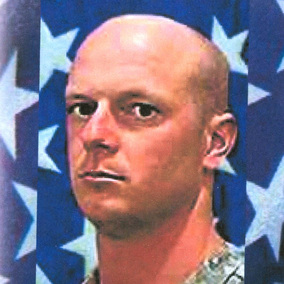
SFC Daniel Lightner 27 October 2005
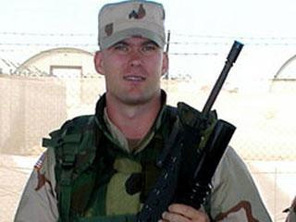
SSG Keith Bennett 11 December 2005

SPC Kirsten Fike 10 August 2006
|
|
**SFC Robert Fike 11 June 2010 Received posthumous promotion from SSG to SFC. **SSG Bryan Hoover 11 June 2010 From local and wire reports A Pennsylvania National Guard official said two soldiers from Western Pennsylvania have been killed in a suicide bomb attack in Afghanistan. Guard spokesman Cory Angell said the guardsmen were SFC Robert Fike of Conneautville, Crawford County, and SSG Bryan Hoover of West Elizabeth. He said the attack happened Friday in Zabul province in southeastern Afghanistan while the men were on a foot patrol. Several civilians were killed. SFC Fike, a corrections officer at the State Correctional Institution Albion, had been deployed to Saudi Arabia in 2002 and to Iraq in 2007. His father, James Fike of Stafford, said he loved the military and also loved hunting and fishing as well as being with his daughter. SSG Hoover was a track coach for the Elizabeth Forward School District. Students gathered at the high school on Saturday to place a memorial there and to remember the man one student called a "nice, inspirational coach." They were serving with the Pennsylvania Army National Guard's Company C, 1st Battalion, 110th Infantry, in Connellsville. They were providing security with Provincial Reconstruction Team Zabul. "These were experienced soldiers who had done other combat deployments and were dedicated to serving the nation and the commonwealth," said Maj. Gen. Randall Marchi, commander, 28th Infantry Division. "It is a tragic loss and we send our heartfelt sympathies to their families and friends." SFC Fike was a 1989 graduate of Penn Trafford High School and earned a bachelor's degree from Edinboro University. He joined the Pennsylvania Army National Guard in September 1993. In his 16 years of service he served two tours, one in Saudi Arabia from 2002 to 2003 and another in Iraq from 2007 to 2008. His awards include the Army Commendation Medal, Army Achievement Medal, Armed Forces Reserve Medal, Global War on Terrorism Expeditionary and Service Medals and Iraq Campaign Medal. SSG Hoover earned a bachelor's degree in sports management from California University of Pennsylvania. He joined the Marine Corps in October 1999 and served on active duty until September 2004. In March 2005, after several months in the Marine Corps Reserve, he enlisted in the Pennsylvania National Guard. His military awards include the Army Commendation Medal, Pennsylvania Commendation Medal, Navy/Marine Corps Achievement Medal, Marine Corps Good Conduct Medal, Global War on Terrorism Expeditionary Medal, Air Assault Badge and Humanitarian Service Medal. Sergeants Fike and Hoover previously served together in Iraq in 2007 and 2008 with the 28th Military Police Company. They were the 35th and 36th soldiers of the Pennsylvania National Guard and the 3rd and 4th 28th Military Police officers killed in the wars in Iraq and Afghanistan. Article from http://old.post-gazette.com/pg/10165/1065439-84.stm?cmpid=news.xml 28th ID Museum at FIG Fort Indiantown Gap - Barracks Building T-8-57 and Barracks Building T-8-56 - These two World War II vintage buildings at the intersection of Service and Wiley roads hold the history of the Pennsylvania National Guard's 28th Infantry Division as the guard's official museum. USAF Maj. Gen. Frank H. Smoker, Jr. (retired), who was commander of the Pennsylvania Air National Guard, had the idea for a museum in 1985. Smoker passed on in 2010 at the age of 85. "He was more than a friend to the museum," said Charles Oellig, who has been the museum's director/curator since 1998 after he retired as a collections technician from the State Museum of Pennsylvania in Harrisburg. He also is a Fellow of the Company of Military Historians. Oellig has served as curator ever since. Oellig served in the 28th's Military Police Company from 1958 to 1964. The 28th traces its history back to Ben Franklin, who formed in 1747 a militia known as the "Association for the Common Defense" or the "Associators." In 1869, it was reorganized by Maj. Gen. John Hartranft (who claimed there were too many generals for his liking) from 22 divisions into one division and renamed the National Guard of Pennsylvania. Gen. Omar Bradley commanded the division from June 1942 to February 1943. And the division played an important role in the Battle of the Bulge. Other noteworthy Local News items Army National Guard Pfc. Patricia A. Bronson has returned to the 28th Military Police Company, in Johnstown, Pa. after being deployed to an overseas forward operating base in support of Operation Iraqi Freedom. Bronson is a chemical operations specialist with two years of military service. She is the daughter of Virginia A. Bronson of N.E. 2nd Ave., Poulsbo. The private is a 2006 graduate of North Kitsap High School. Army National Guard Spec. Nicholas R. Carrico, son of Lorie Kodiak, Brainerd, recently returned to the 28th Military Police Company, Johnstown, Pa., after being deployed to an overseas forward operating base in support of Operation Iraqi Freedom. Carrico is a health care specialist with eight years of military service. http://www.tribdem.com/news/local_news/area-soldiers-set-for-iraq-war-duty/article_f27b5d82-7533-54aa-8b00-c9a3cbb75da6.html Links of interest: http://www.milvet.state.pa.us/DMVA/3942.htm **MP Historian casualty documents http://www.pngmilitarymuseum.org/annual_histories/28th_ID/28MP2008.pdf http://www.militarypolice.com/index.php?name=news&file=article&sid=10 http://www.ldnews.com/story/opinion/columnists/2015/10/30/county-currents-museum-at-gap-treasure-trove-military/74995492/ http://www.bloodybucket.be/ |
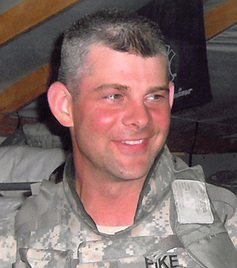
SFC Robert Fike 11 June 2010

SSG Bryan Hoover 11 June 2010
Additional information regarding the history of the 28th Military Police Company from research conducted by LTC Greg Davis (ret) over a period of 20 years. From his beginnings as an enlisted soldier with the 28th MP Company, Davis attended OCS, and served as 28th MP Company Commander from 1991 - 1994 and as the 28th ID Provost Marshal from 2004 - 2007.

note: LTC Davis (ret) also found that the helmet belonging to PFC Kenneth Dagman (the only 28th MP KIA from WWII) is being displayed in a museum in Belgium. Davis also provided this site the grave marker photographs pictured in the World War I section above.
| ||
